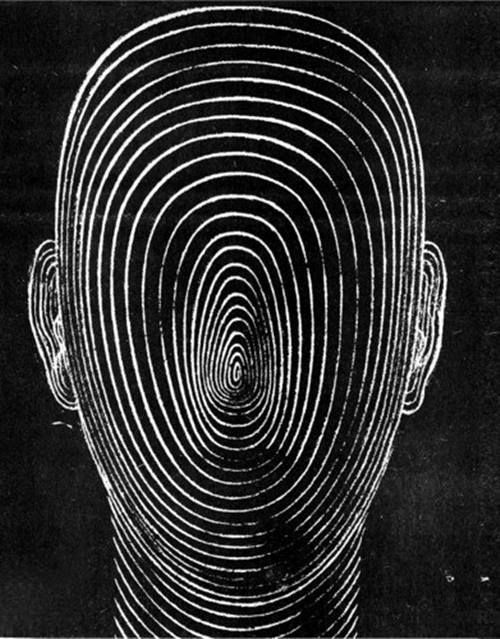
On Sublimation
Sure, one has to settle on a form. The whole point is avoiding direct and immediate expression of impulses, which is often anathema to civilization. In many cases, it is also cruel to oneself.
Know thyself is an almost cruel piece of simple wisdom. It reminds me of a high school subject we had, Thinking Skills, that was offered to those for whom no “meatier” discipline was deemed assailable. We laughed at those students, though not to their faces, as most of them were quite large. I’m not laughing at them now, and it’s not because I’ve outgrown putting others down. I’m not laughing because Lord knows I could have used some intensive thinking skills courses at the time. I wouldn’t turn down a class even now.
That phrase by Socrates sat in a similar mental bucket. I whittled it to biographical facts, habits, hobbies, strengths, weaknesses, and aspirations. What more was there to know? Job well done, I thought, and I could strut my stuff as an authority on self-knowledge.
That view was squarely against one of the original meanings when gnothi seauton, the ancient Greek translation, was inscribed outside the Temple of Apollo at Delphi. There it was a call to humility, a reminder of human limitations, mortality, and a rightful place in the cosmos. One of those human limitations is that you cannot know anything completely, including yourself.
Now I see that it’s a lifelong imperative. A more accurate form may be peel thyself, though I can see why that might not catch on.
Endless as it is, there are two points worth marking on this journey. The first is having the intention at all to examine and expand your model of yourself.
The second is reaching a point of conscious sublimation.
Alchemy of Desires
In the Freudian sense, sublimation is converting impulses into a socially accepted and culturally valuable form. Freud was thinking mostly of sexual and aggressive urges, which I agree make up the bulk of problematic behavior. Civilization expends much effort in redirecting young male aggression, often the most destabilizing force in a community, into more beneficial status-seeking.
Look at gang warfare. The root of the havoc, stripped of its form, is a collection of perfectly natural impulses that more fortunate people have the means to express differently. Horrific as the consequences can be, the fundamental needs, including belonging, safety, and dignity, are common to us all.
That’s a dysfunctional expression of impulse writ large, because it’s less challenging to spot a principle from afar before laser-focusing it on oneself. The term psychologists use is primitive defense mechanisms.
It’s the less explosive but still quite destructive that got me interested in this whole subject.
I’ve had my own history of self-destructive behavior. Much worse than the guilt of the self-sabotage was the excavation of the drives underpinning it.
My main interest in sublimation hinges on the individual’s well-being and flourishing. An impulse expressed in its raw form is often dangerous to the individual. A desire for escapism is one example. Achieved via narcotics, it can be life-threatening. Via fiction or movies, it’s harmless and arguably fruitful.
Other crudely expressed impulses, without naming them, land a person in prison. That reminds me of a line from Norman Mailer’s The Fight, where he says boxing gives a career to a man who might otherwise kill a man in the street.
Honest Examination
Frustration is a good radar for these impulses that can otherwise be sublimated. Part of it is that, although the desire may not be strictly problematic, its fulfilment is simply unavailable. The resulting frustration can be the fuel behind subsequent impulses that are dangerous for the person and others.
Some years ago, while living in a city center, I experienced this whenever the sounds of Friday night merriment wafted into my studio apartment. I’d been out enough times, a few dozen, to outgrow noisy nightlife. But still the urge struck, even though I knew Saturday morning would be full of regret.
I lost this battle a few times, with predictable after-effects, before entering a relationship ended the impulse for a while.
Had I been introspective back then, I might have realized it wasn’t the clubbing I wanted or, really, even the girlfriend. I was seeking connection.
So I got the need met without subjecting myself to a hangover or going through something that, despite an impulse to do it, I needed significant amounts of intoxicant to enjoy.
I’m getting more practiced at spotting my impulses, including the less savory ones, such as envy. Rather than repressing them, the enemy of sublimation, I seek what they’re telling me about myself.
A more innocuous feeling has curdled subconsciously into the less agreeable impulse. My aim is tracking that subconscious process and intentionally channelling the original feeling into a more fruitful outlet.
Downside of Identity
Tracing a desire down to a perfectly ordinary neutral source can be destabilizing. It may become apparent that there’s some ego investment in that particular feeling. A slightly unsophisticated but charming understanding of this human complexity that a religious acquaintance once shared is that a person has multiple souls. I believe he said three, each with its own interests.
I’m satisfied believing that a human being has one base reality as an animal seeking to advance its existence. While I subscribe to ideas of individuals being unique, in my case, especially in introspective contexts, I try to downplay it. It creates incentives to hold onto impulses as expressions of “me” rather than manifestations of wholly unexceptional drives. I try to relocate the uniqueness, if at all, in the expression of a drive rather than the drive itself.
There’s no blank slate after the discovery of the urge’s source, however. The preferred expressions are baked in, either at the genetic level or through early psychological imprints.
Discovery Versus Self-Imposition.
Much of modern globalized culture revolves around advancing toward an image. Make thyself is the great commission, and it sits oddly with emphasis on authenticity and self-discovery. But part of the human condition is a capacity for imagining ideals, and we apply to ourselves. It’s why I return to the idea of the human animal and its unsubtle nudge to accept hard-wired impulses. Everything above them is a flourish, crystallized as it may have become.
Popular ideas in the globalized culture about “growth mindsets” and “self-improvement” have made crafting this ideal self a virtuous goal. So too has the glorification of endless ambition. The opposite forces are the different renditions of mindfulness and watered-down Eastern wisdom traditions.
In a way, self-discovery has become about finding what one wants to be rather than what one is. Desires are indeed useful signals, especially when we ask why those particular desires appeal to us but not others, and how, in fact, desire X and Y, while wildly different at the surface level, originate from the same primal drive.
There is at first brush something deflating about saying: I am an animal. I want to survive and procreate. I am a social animal. I want status and security, maybe dominance. How exactly I want those satisfied is a thin and sometimes opaque film over perfectly common desires.
If self-discovery ends at the level of form without recognizing it is above a substrate, it’s somewhat illusory.
Sure, one has to settle on a form. The whole point is avoiding direct and immediate expression of impulses, which is often anathema to civilization. In many cases, it is also cruel to oneself.
Kindness to Self and Others
A strange thing about entering a social circle is one agrees, implicitly, to be a subject of gossip at some time or the other. Two thirds of conversation, according to some scientists, is about absent third parties.
I find gossip highly unappealing. When someone tells me an unfortunate fact about someone else, expecting me to be grateful perhaps, I instantly wish I had not heard it. But it would be absurd to claim I don’t have the same instinct for social voyeurism.
I direct it, at times to an extent that causes me mild concern, toward the Daily Mail and Sidney Sheldon novels. I think these are far safer and more stimulating outlets.
There’s also the matter of vices, or what we call small exercises in self-destruction. Some think of these is that they are necessary blowholes amidst the pressures of near-constant self-restraint. Others take them to be charming parts of themselves, dashes of color to their personalities.
There is a tendency to view one’s vices almost as fated. Some poisons may have a special appeal for reasons beyond conscious thought, but it’s far from a given. One treating it as such makes it a self-fulfilling prophecy.
Ultimately, Why?
I doubt there are many people whose lives wouldn’t be better if they sought to express their urges more consciously. Urges there apply in a maximalist sense, for even a dream or a longing is an urge in its infancy.
The first benefit is that there is self-evident joy in clarity.
The second is that someone who can channel his urges through different forms suffers much less supply anxiety. If one means is not available, his self-regulation doesn’t collapse because another is available or can be found.
The third, as stressed above, is that direct or blind expression of impulses often causes problems for oneself and others. Civilization, in fact, may be one big exercise in offering indirect outlets.
But civilization or one’s immediate community, if somewhat functional, only does so to the extent necessary for coordination. For self-realization and greater fulfilment, one needs to take one’s sublimation several steps further.